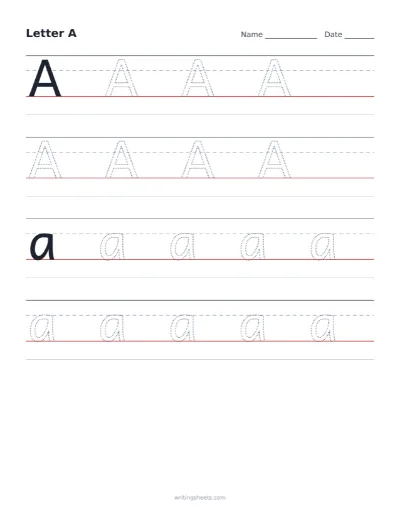
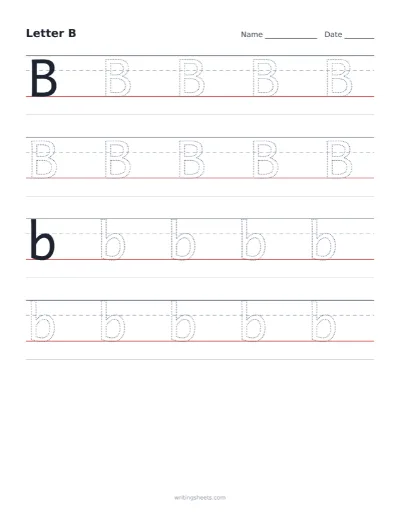
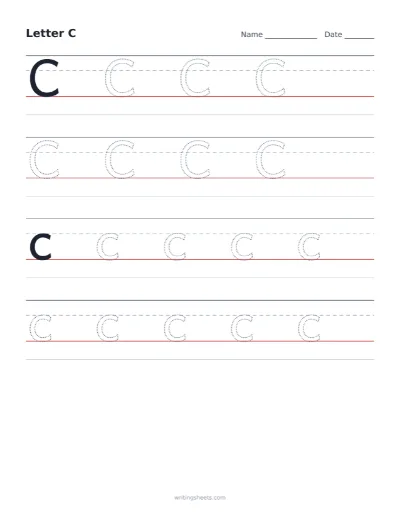
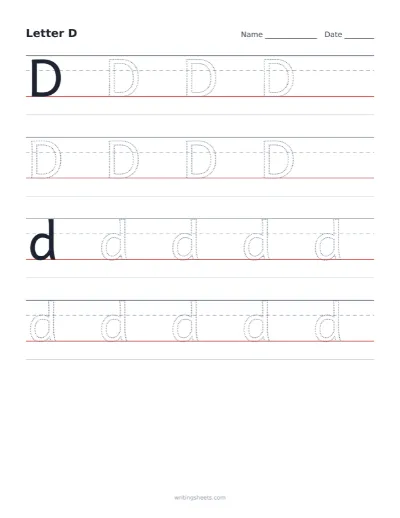
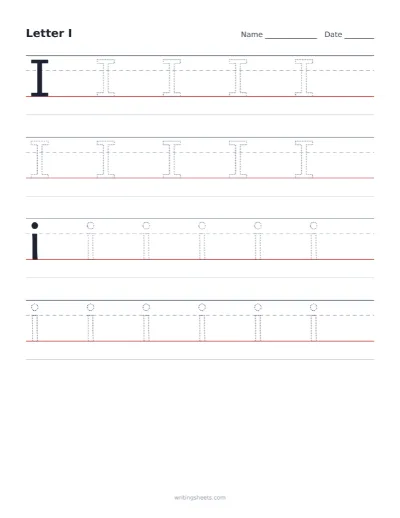
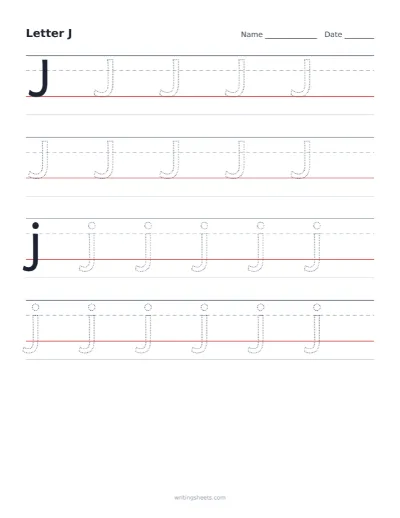
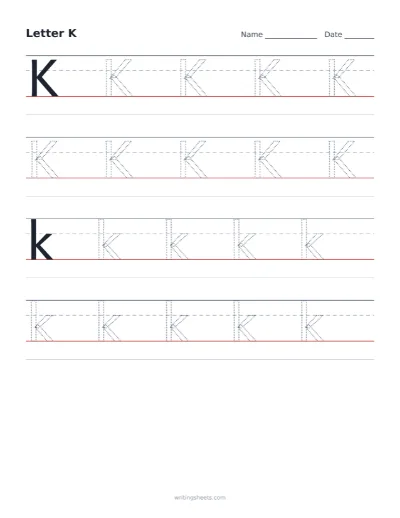
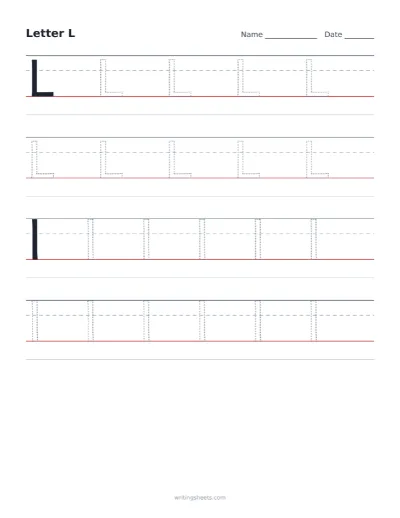
What's on the Sheet
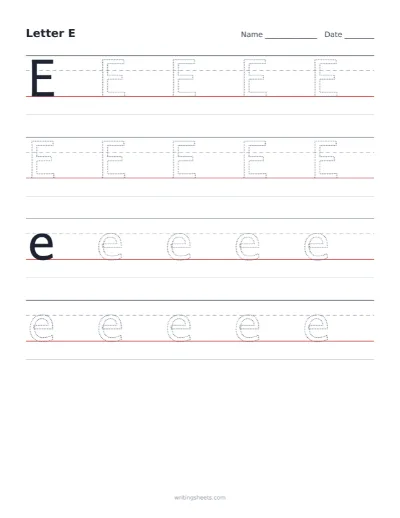
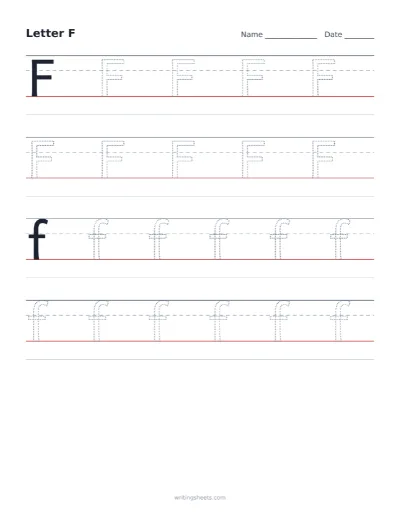
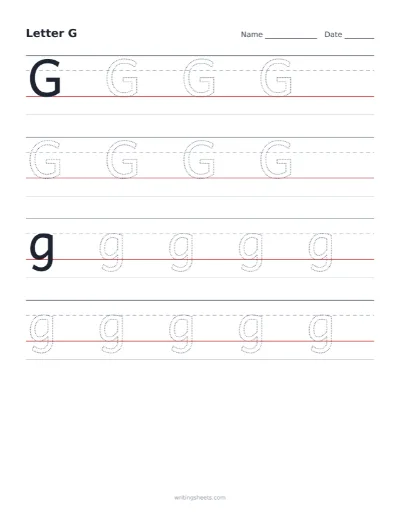
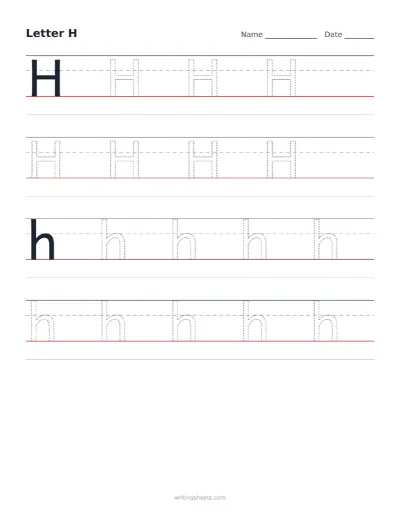
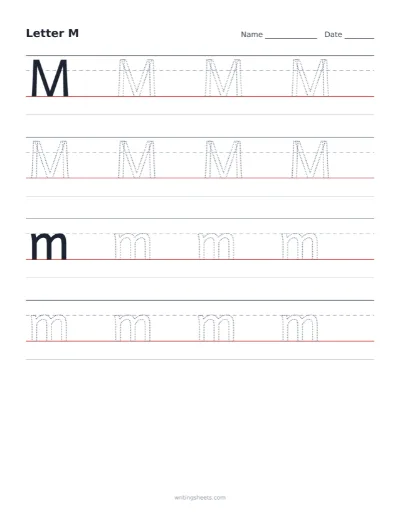
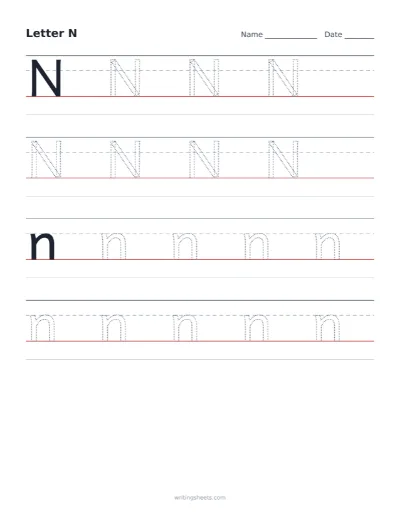
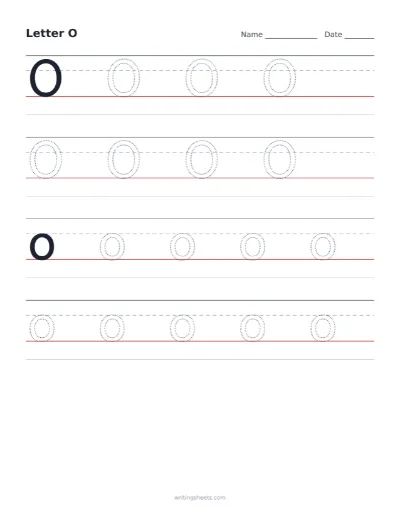
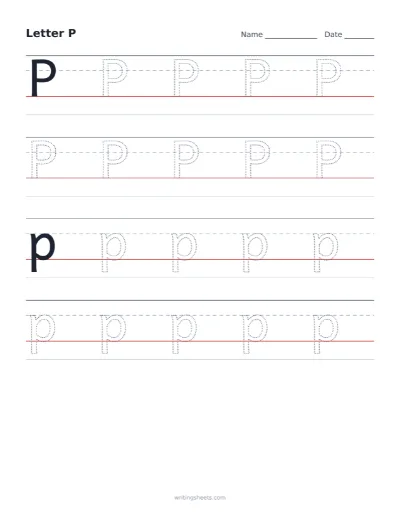
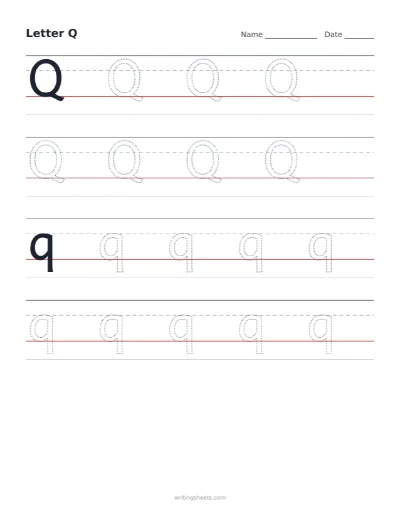
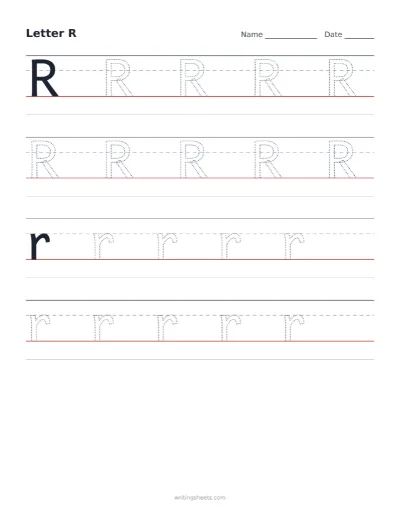
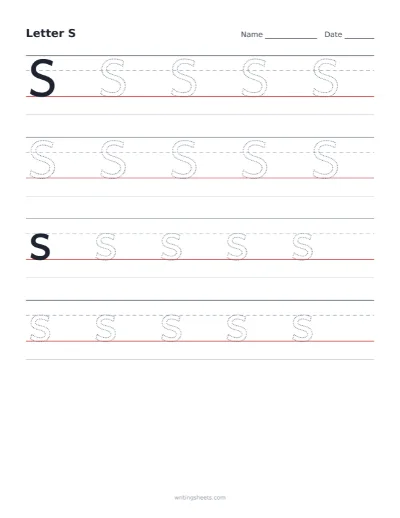
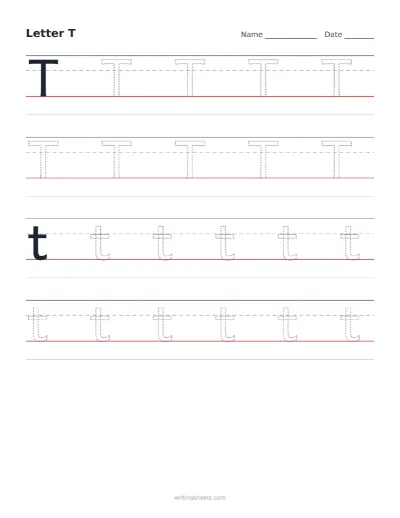
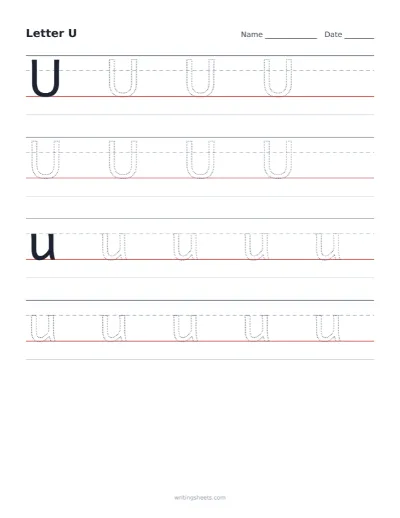
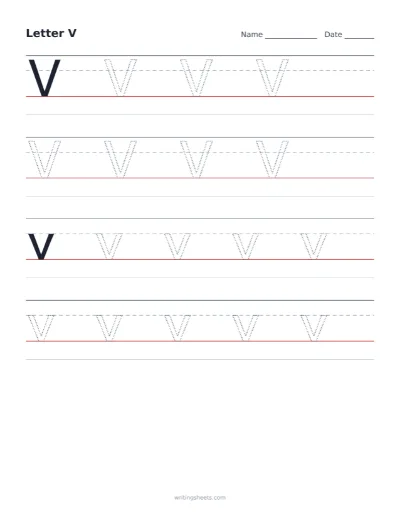
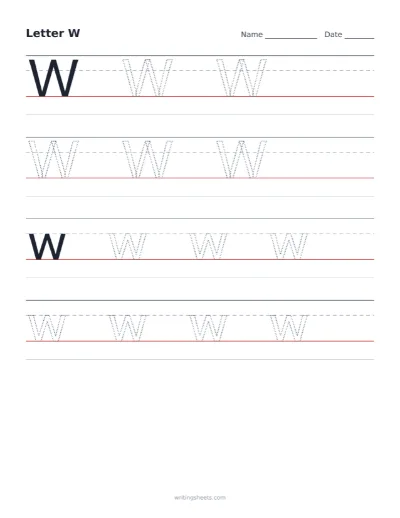
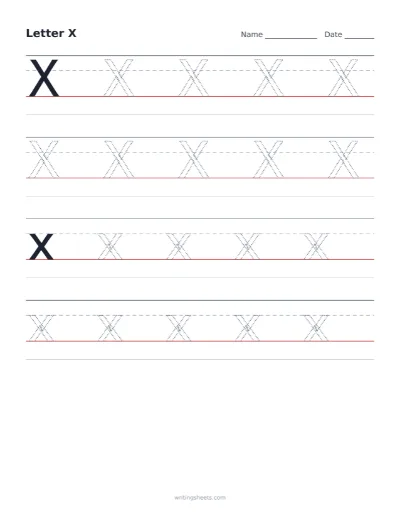
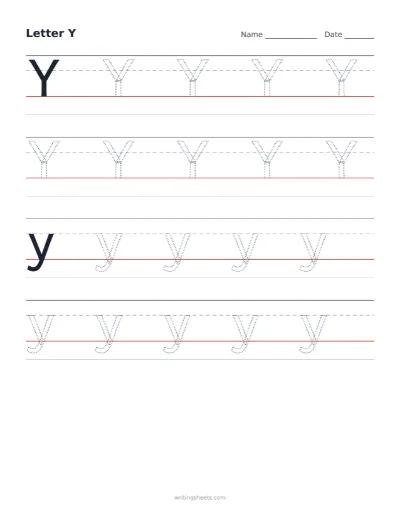
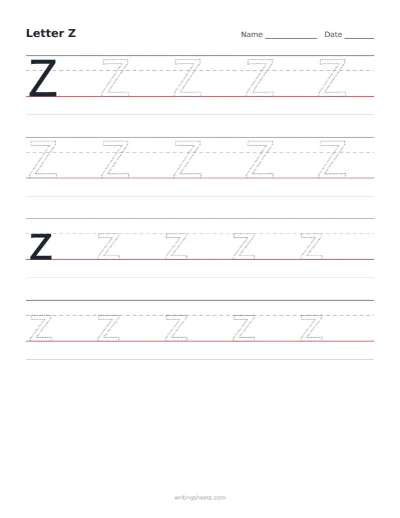
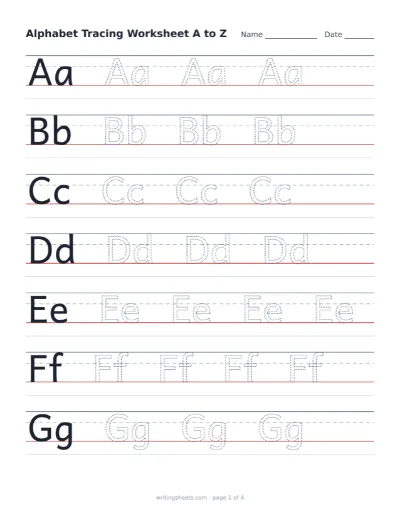
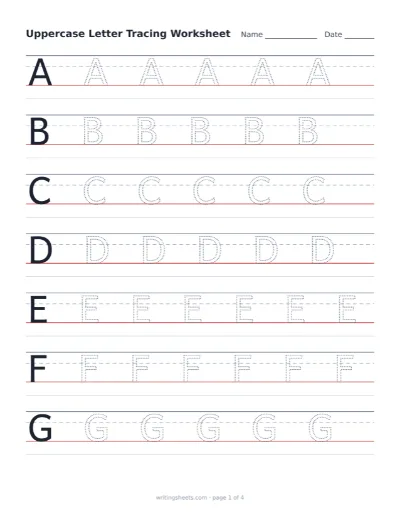
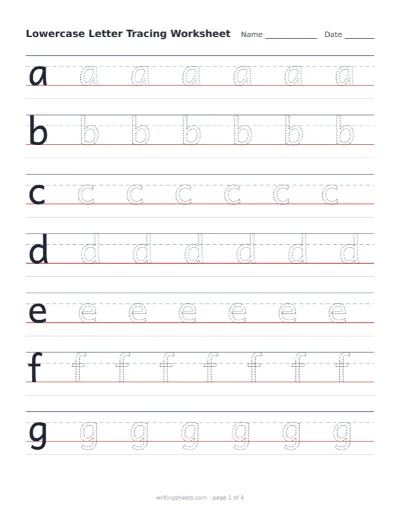
Each letter gets its own row: the first copy solid, the rest dotted to trace. The four guide lines are fitted to the letters: the top line, a dashed midline where small letters stop, the red baseline they sit on, and a light line below for tails (g, j, p, q, y).
One Letter at a Time
For a letter of the week, choose "One letter" under What to Practice and pick the letter. The sheet gives the capital and the small letter, then any words you type, such as names or words that start with that letter.
Which Letters to Start With
Children usually find straight lines easier than curves, so many teachers start with capitals made only of lines (L, T, I, E, F, H) before the round ones. For small letters, a common order starts with c, a, d, g and o, which all begin with the same curve. If tracing letters is still hard, go back a step to pre-writing lines and shapes.
Print or Cursive
- Print is the plain print style most early readers see in books.
- Slanted Print has a small slant and tails on some letters, as in the slanted print styles some schools use to lead into cursive.
- Cursive is traditional joined-up writing; see the cursive alphabet for every letter step by step.
- School Print has the exit flicks most primary schools teach, ready to join.
- Joined is joined handwriting; see joined handwriting for the joins.
More Sheets
- Name tracing: a child's own name to trace.
- Number tracing: 0 to 9, 1 to 10 or 1 to 20.
- Handwriting paper: blank lined paper to write on.
- Sight words: the Dolch lists by grade, once the letters are known.
Handwriting Help
- Left-handed handwriting: paper position and grip for left-handed children.
- Dyslexia and handwriting: b and d, and sheets that are easier to read.
- Handwriting styles: upright print as taught with Zaner-Bloser, or slanted print as in D'Nealian.
- Letter formation: every letter with its start point, in letter families.