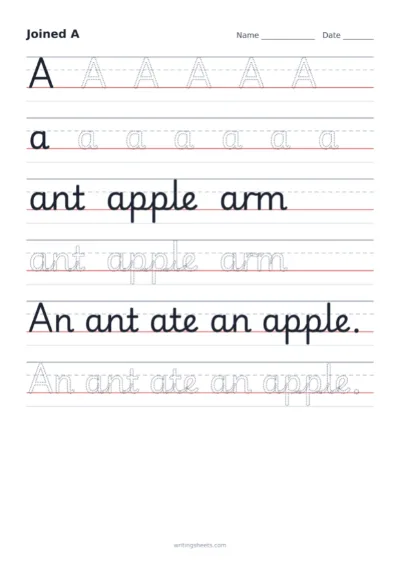
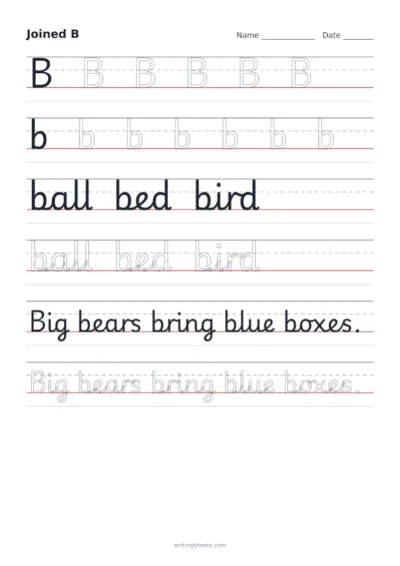
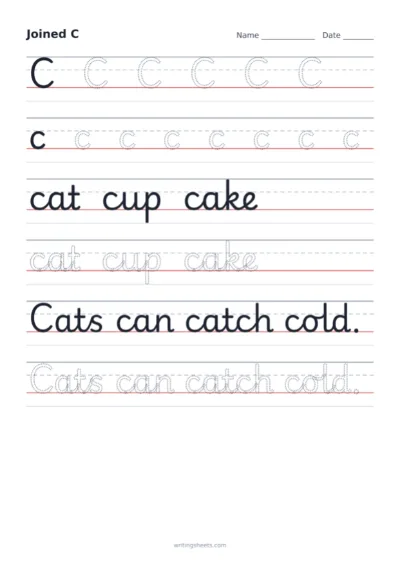
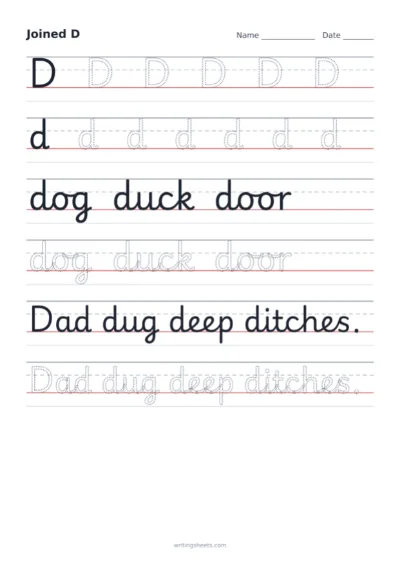
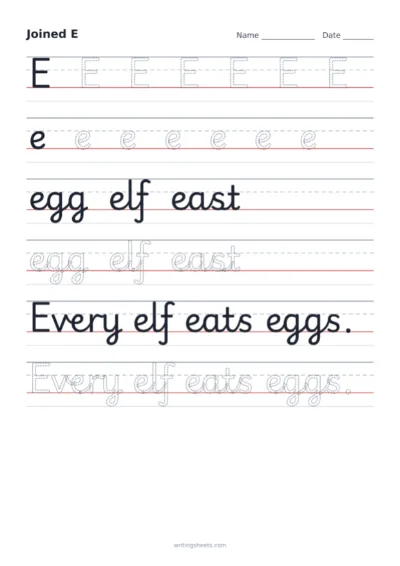
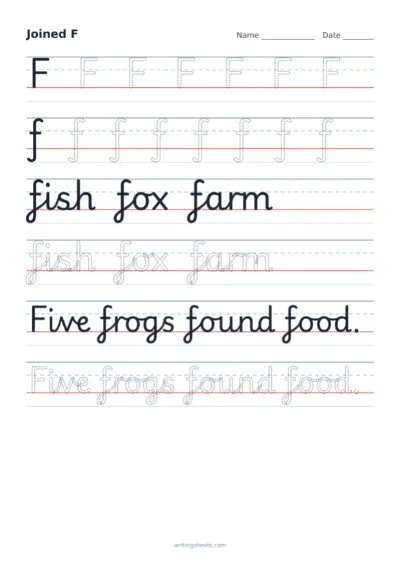
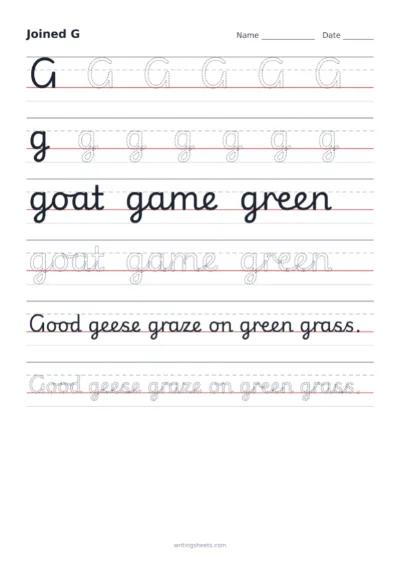
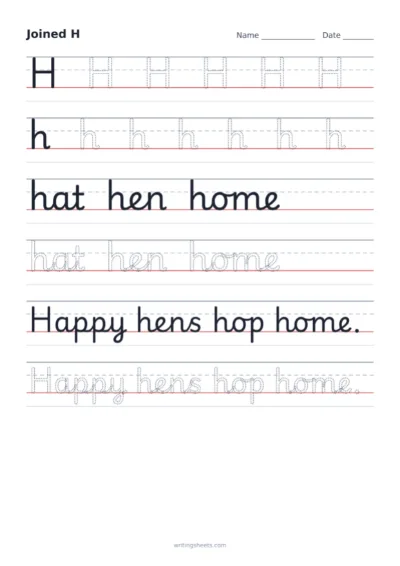
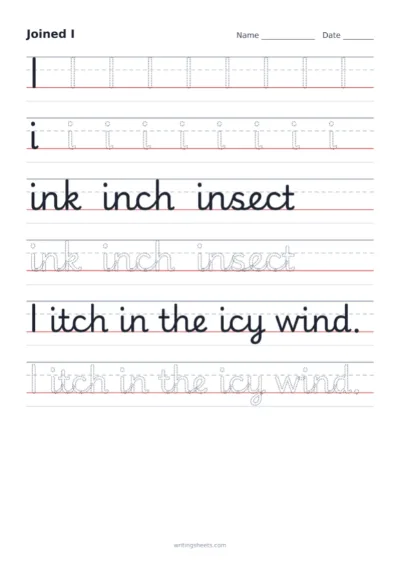
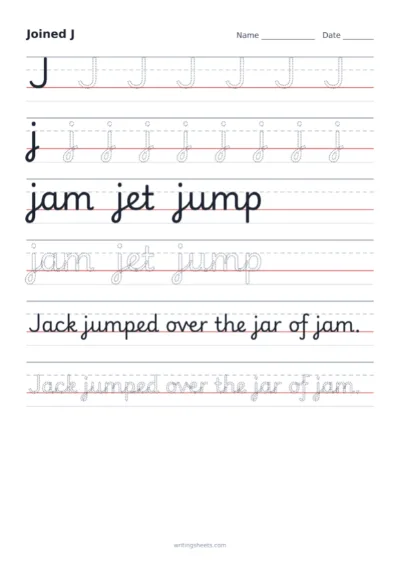
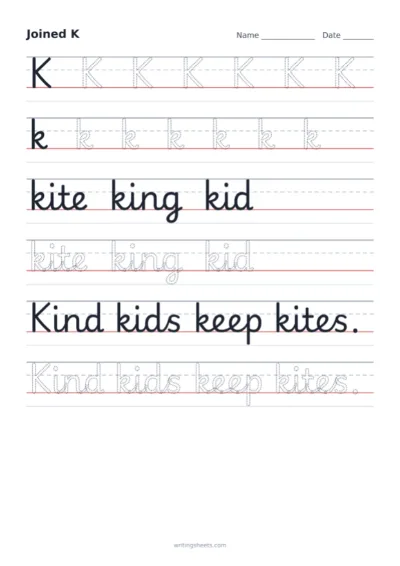
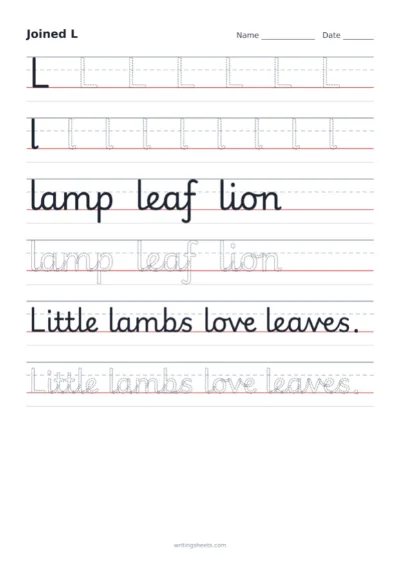
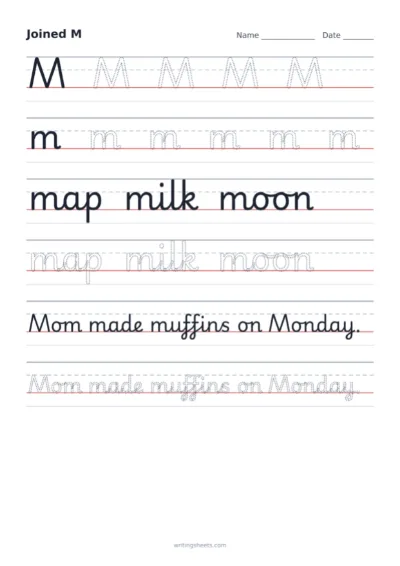
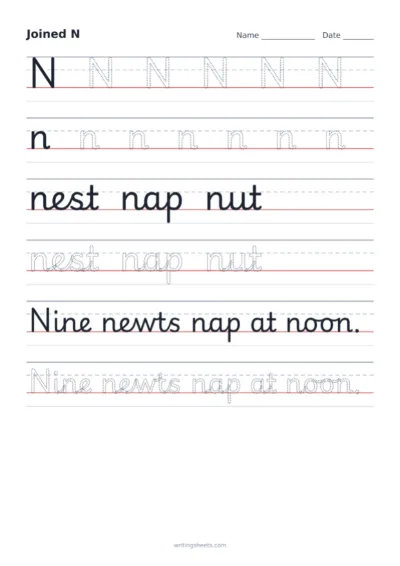
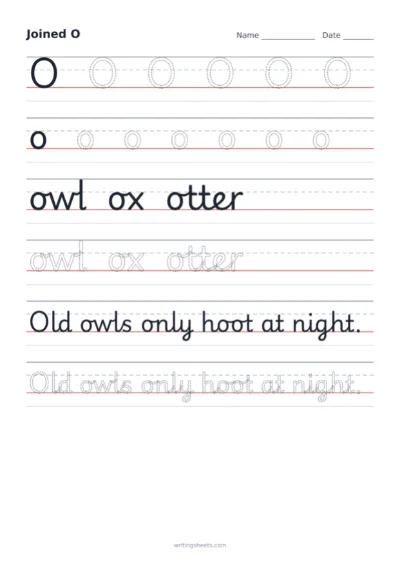
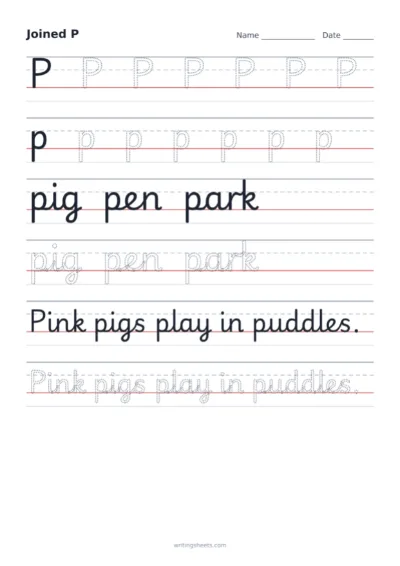
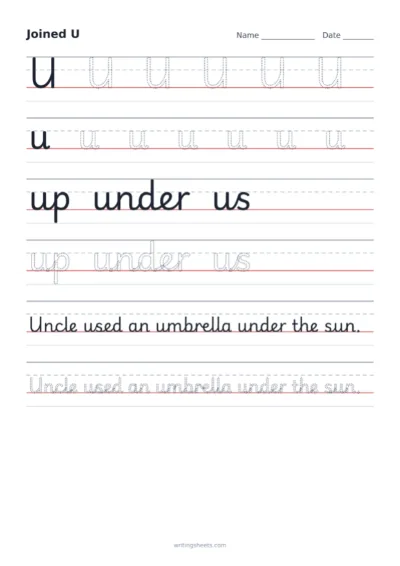
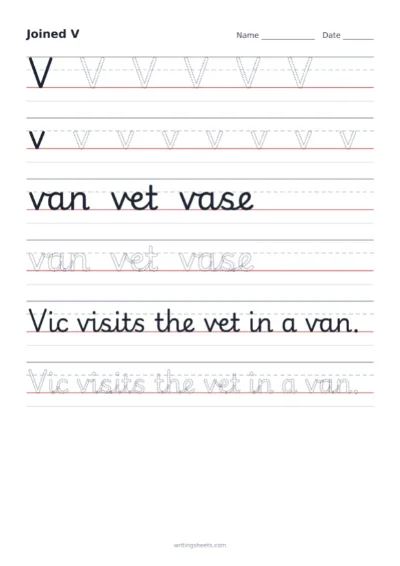
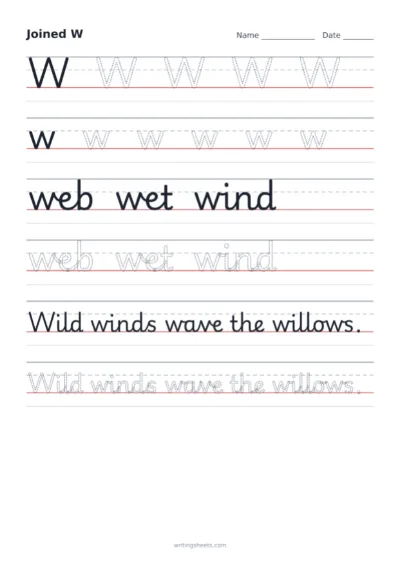
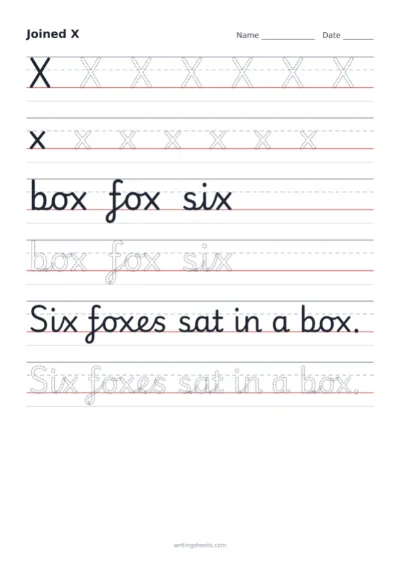
The Four Kinds of Join
Teachers in England usually teach the joins in four groups, one at a time:
| Join | What it is | Practise with |
|---|---|---|
| 1. Diagonal join to a short letter | From the baseline up to the top of a short letter | in, um, an, ai, it, cu |
| 2. Diagonal join to a tall letter | From the baseline up to the top of a tall letter | ch, th, il, ik, al, ab |
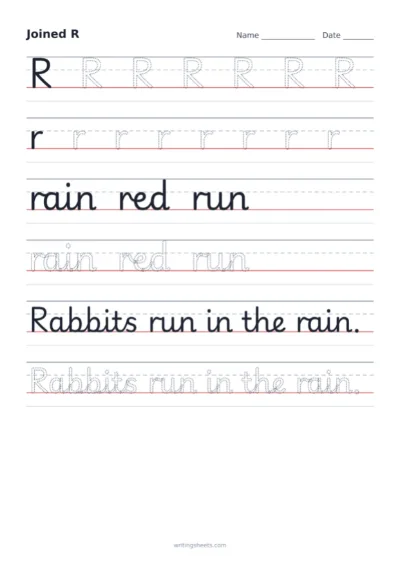
| 3. Horizontal join to a short letter | From the top of o, r, v or w across to the next letter | on, ow, re, ri, vi, wi |
| 4. Horizontal join to a tall letter | From the top of o, r, v or w up to a tall letter | ol, ob, rl, wh, ok, vl |
Type the pairs into the maker, one join per line, to make a sheet of them: choose "A name, words or sentences".
Letters Usually Left Unjoined
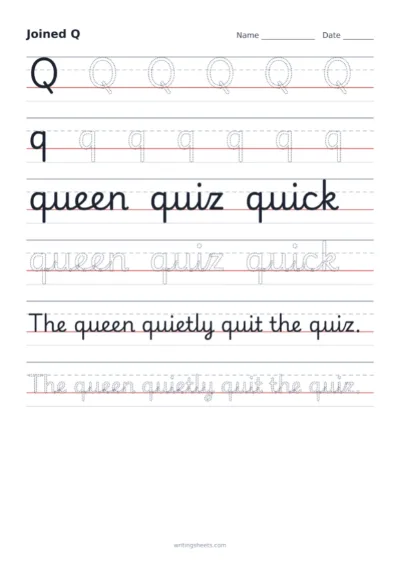
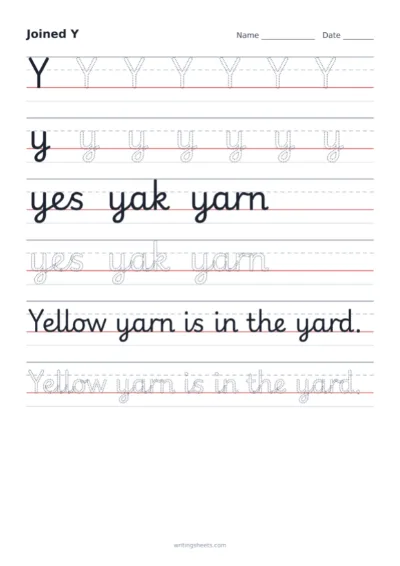
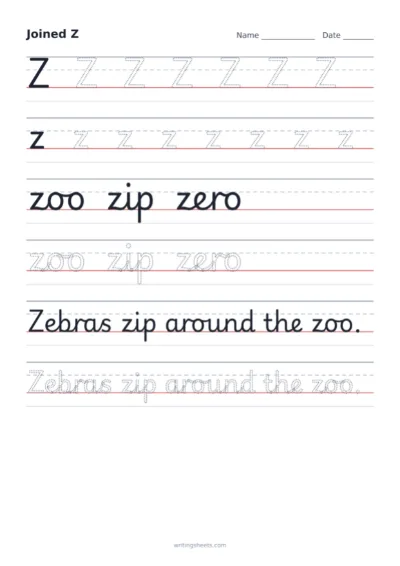
Most schemes don't join from the capitals, or from b, g, j, p, q, x, y and z, which end in a way that makes the join awkward. Some schemes join from g, j and y with a loop. Follow what your child's school teaches: the sheets here use a joined style made for English schools, and the maker has a print style too.
When Children Learn to Join
The National Curriculum asks for the first joining strokes in Year 2, and for joined handwriting in most writing by the end of Year 4. Many schools start earlier with precursive letters, which already end with the stroke that will become the join.
How It Differs From American Cursive
| UK joined handwriting | US cursive | |
|---|---|---|
| Loops | Few, mostly none on tall letters | Loops on b, d, f, h, k, l and on tails |
| Capitals | Print-like, never joined | Their own cursive shapes, many joined |
| Slant | Upright or a slight slant | A clear forward slant |
| Taught | From Year 2 (age 6 to 7) | From second or third grade (age 7 to 9) |
For American cursive, see the cursive alphabet.
More UK Sheets
Practise joins on real words with the Year 3 and 4 spelling list or the Year 2 common exception words: choose "Joined" on either sheet.