Why Mark Making Matters
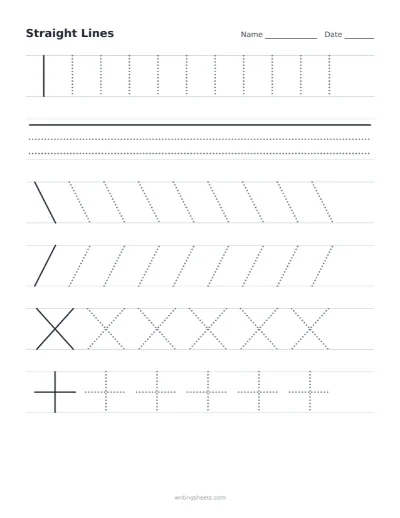
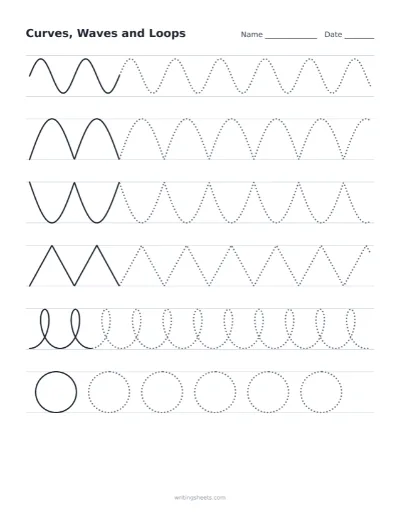
Every letter is made of a few movements: straight lines down and across, curves, diagonals and circles. A child who can make those marks with control can learn letters quickly. Mark making also builds the hand and shoulder strength that writing needs, which is why the EYFS puts so much weight on it.
The Order Marks Usually Come In
- Scribbles and dots, with the whole arm.
- Lines down, then across.
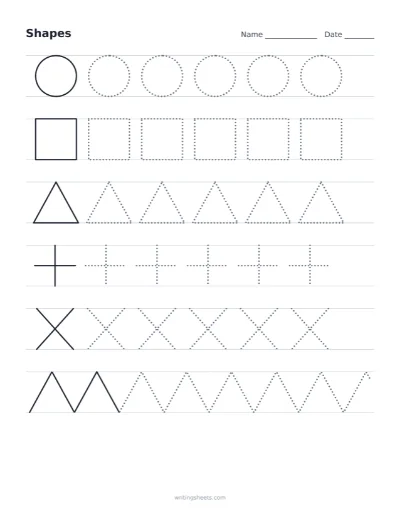
- Circles, which children often manage around age 3.
- A cross (+), then a square.
- Diagonal lines, a diagonal cross (×) and a triangle, which often come around age 5.
Children vary a lot, so use this as a guide to what to try next, not a checklist.
Mark Making Activities
- Big first: chalk on the playground, paint on an easel, water and a brush on a fence. Big marks build the shoulder before the fingers.
- Sensory trays: draw lines and shapes with a finger in sand, salt, shaving foam or flour.
- Playdough before a pencil session: squeeze, roll and pinch to warm up the fingers.
- Tools of every size: chunky crayons, sponges, sticks in mud, and later short crayons, which encourage a pinch grip.
- Talk about the marks: "a long line down", "round and round", so the words used later for letters are already known.
The Early Learning Goals
By the end of Reception, the EYFS expects children to hold a pencil effectively in preparation for fluent writing, using the tripod grip in almost all cases, and to write recognisable letters, most of them correctly formed. Mark making in Nursery and Reception is the start of both. See pencil grip for how grip develops.
Next Steps
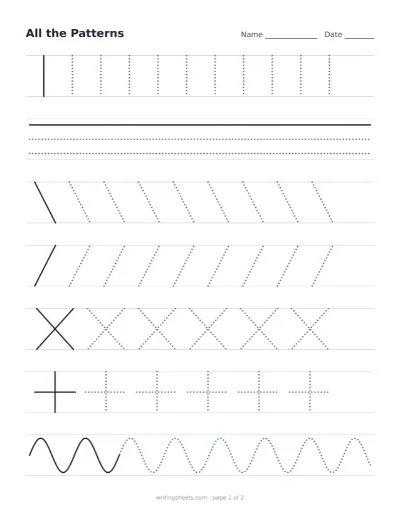
When the patterns are easy, move on to the pre-writing patterns one at a time, then to letter formation. For more sheets for this age, see preschool and nursery.