Tricky Words by Phase
These are the tricky words from Letters and Sounds, the phonics programme English schools used from 2007:
| Phase | Usually taught | Tricky words |
|---|---|---|
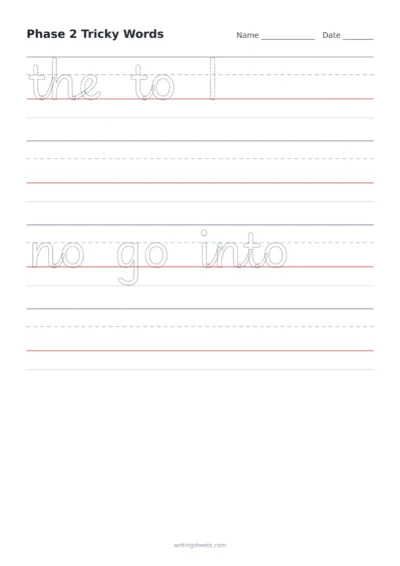
| Phase 2 | Reception, autumn | the, to, I, no, go, into |
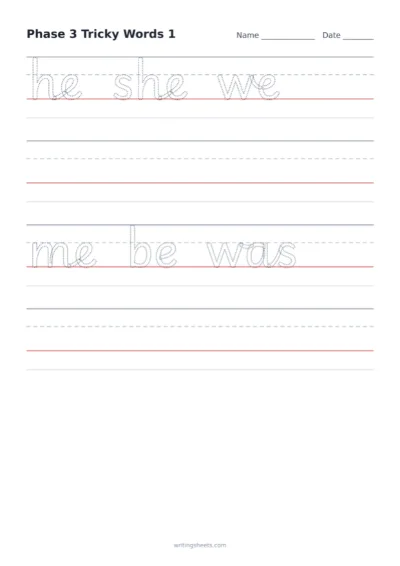
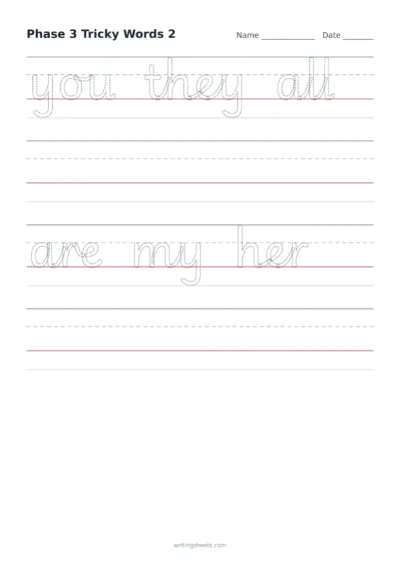
| Phase 3 | Reception, spring and summer | he, she, we, me, be, was, you, they, all, are, my, her |
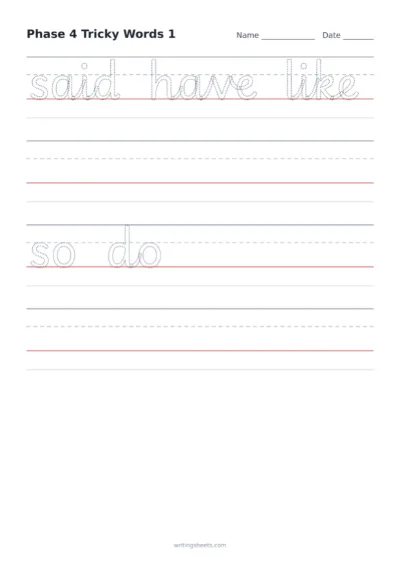
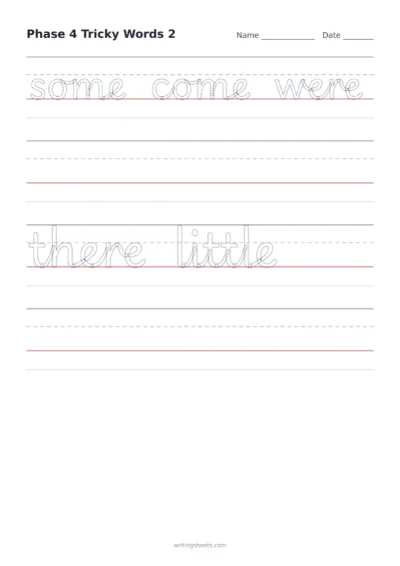
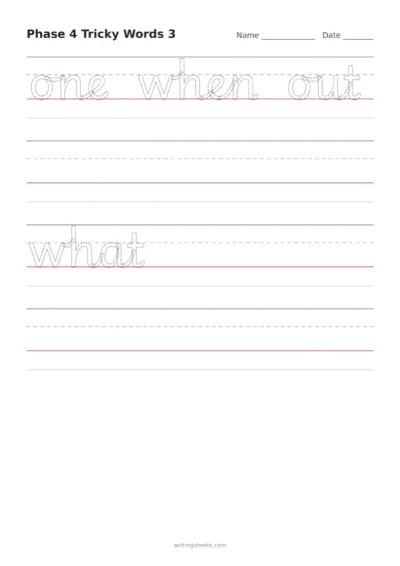
| Phase 4 | End of Reception | said, have, like, so, do, some, come, were, there, little, one, when, out, what |
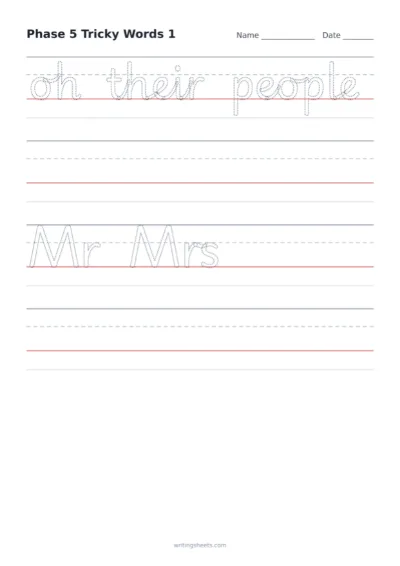
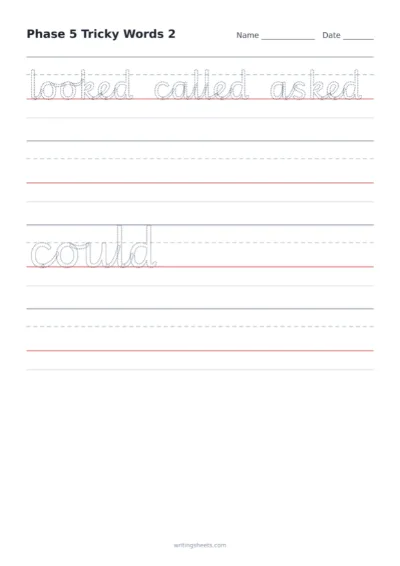
| Phase 5 | Year 1 | oh, their, people, Mr, Mrs, looked, called, asked, could |
The sheet above has the Phase 2 and 3 words. There are ready-made sheets for every phase below, or type your own school's words into the box, three to a line.
Your School's Own List
Since 2021, schools in England have been expected to teach phonics with a scheme validated by the Department for Education, such as Little Wandle or Read Write Inc., and each scheme has its own tricky words, taught in its own order. Most of the words are the same as above, but the order and the name (tricky words, red words, common exception words) differ. If your child brings home a list, type those words into the box.
How to Teach a Tricky Word
- Read it together, and sound out the parts that do follow the rules.
- Find the tricky part: the e sound spelled ai in said, the o that sounds like u in come.
- Trace it on the sheet, saying each letter.
- Write it from memory in the empty row, then find it in a book.
After Tricky Words
In Year 1 and Year 2, the National Curriculum's common exception words take over, for spelling as well as reading.